Delta Sleep-Inducing Peptide (DSIP): A Peptide For Sleep Support?
Why Sleep Matters
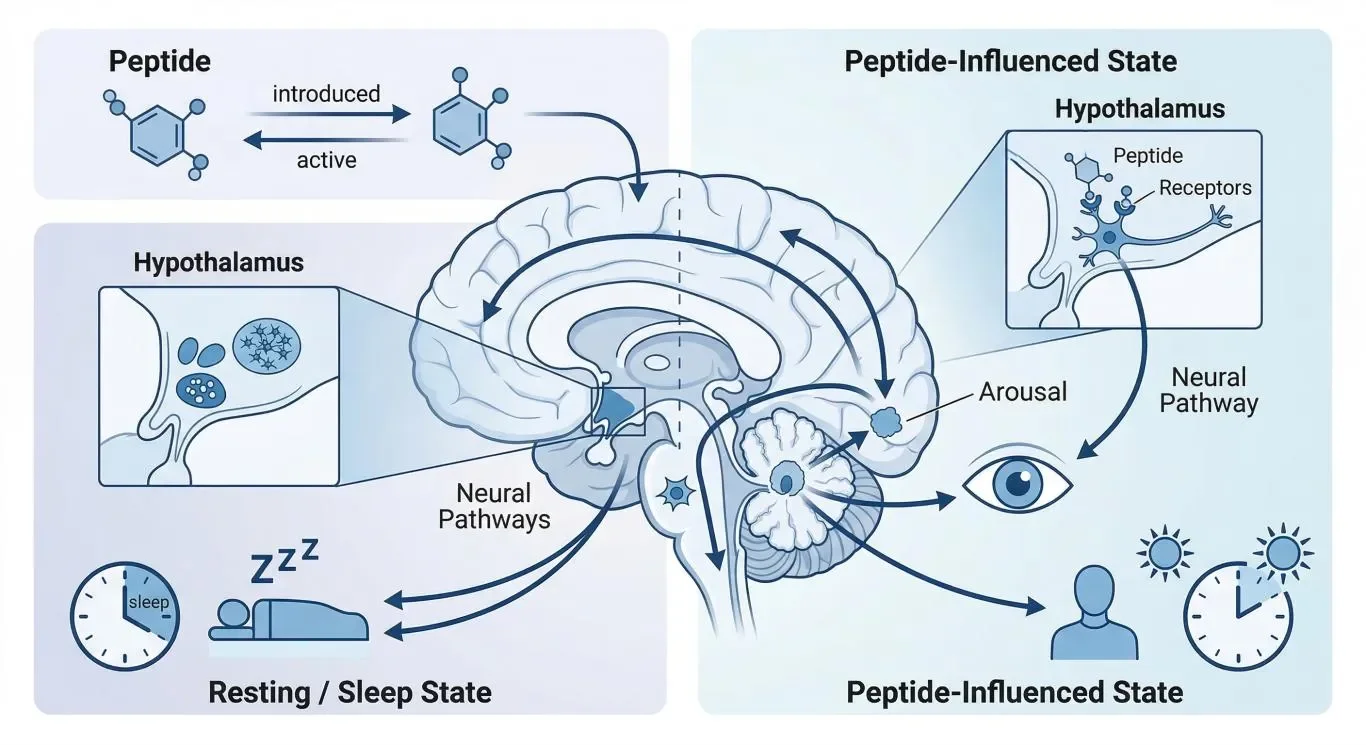
Sleep is an important foundation for overall health. Poor or disrupted sleep may be associated with changes in inflammation, hormone regulation, cognitive function, mood, and stress resilience.
For people with persistent insomnia—particularly those who have not responded adequately to conventional approaches—researchers have investigated DSIP (delta sleep-inducing peptide) as a potential sleep-regulating compound.
What Is Delta sleep inducing peptide (DSIP)?
Delta sleep-inducing peptide (DSIP) is a naturally occurring peptide consisting of nine amino acids. It was first isolated in 1977 by Swiss researchers.
It was given its name because early research suggested that it could influence delta-wave activity on EEG, which is associated with deeper stages of sleep.
DSIP has been identified in several areas of the nervous and endocrine systems, including the hypothalamus, limbic system, and pituitary. Researchers have proposed that it may have regulatory effects involving sleep, stress responses, and neuroendocrine function.
What Has the Research Found?
Research on DSIP was particularly active from the 1970s through the early 1990s, with studies examining insomnia, sleep regulation, stress responses, and other potential effects.
Several early human studies reported improvements in aspects of sleep following intravenous DSIP administration, including:
Longer total sleep time
Improved sleep efficiency
Shorter time needed to fall asleep
Fewer nighttime awakenings
Changes in sleep architecture
Improvements in some measures of daytime alertness and functioning
For example, one study involving 18 people with chronic insomnia reported that sleep patterns improved toward normal following a series of DSIP treatments, with some improvements persisting during a one-week follow-up period.
Another small study of six people with chronic insomnia reported longer sleep duration and fewer sleep interruptions after intravenous DSIP. The sleep-promoting effect appeared primarily during the second hour following administration.
What Do Controlled Trials Show?
Importantly, the results have not been consistent.
A double-blind study involving 16 people with chronic insomnia compared intravenous DSIP with placebo. DSIP was associated with higher sleep efficiency and a shorter time to fall asleep. However, the researchers described the statistically significant effects as weak, noting that some of the findings could have resulted from changes occurring in the placebo group. They concluded that short-term DSIP treatment was unlikely to provide a major therapeutic benefit.
Another study found increases in total sleep and certain stages of non-REM sleep, but the investigators concluded that the overall improvement was of little clinical significance.
These findings are important because they demonstrate that promising early observations have not consistently translated into strong clinical benefits.
Why Is There Scientific Controversy?
Interest in DSIP was relatively high during the 1980s but declined substantially afterward.
The reasons for this decline are debated. Some researchers concluded that the evidence for DSIP as a sleep treatment was negative or ambiguous, while other investigators involved in early DSIP research believed that the findings were meaningful and that limited research funding contributed to the decline in research.
The history of DSIP illustrates an important principle: early positive findings do not necessarily establish that a treatment is clinically effective, and additional well-designed studies are needed to determine whether promising biological effects translate into meaningful patient benefits.
How Might DSIP Work?
Several mechanisms have been proposed based on experimental research. DSIP may potentially influence:
Inhibitory neurotransmitter pathways, including pathways involving GABA
The stress-response system, including cortisol and ACTH regulation
Neuroendocrine signaling, including growth-hormone-related processes during sleep
Pain signaling, although evidence for analgesic effects is primarily experimental and comes largely from animal research
These proposed mechanisms provide biological reasons for continued interest in DSIP, but a plausible mechanism does not by itself establish clinical effectiveness.
What About Mood, Stress, and Cognition?
Some early human research reported changes in daytime alertness, performance, stress tolerance, and coping ability following DSIP administration.
However, there is currently insufficient evidence to conclude that DSIP directly treats depression, anxiety, cognitive impairment, or other psychiatric conditions.
Any potential effects on mood or cognition would likely be considered indirect and potentially related to improvements in sleep, rather than established direct psychiatric effects.
What About Safety?
The early studies generally reported good short-term tolerability. Some studies reported no significant daytime sedation or other observed adverse effects.
One early human study also reported that DSIP was well tolerated without observed psychological, physiological, or biochemical side effects.
However, these studies were small and were conducted decades ago. Therefore, they cannot adequately establish the long-term safety, optimal dosing, drug interactions, or risks associated with repeated or prolonged use.
What Does This Mean for Patients?
DSIP is an experimental peptide, not an established standard treatment for insomnia.
The existing research suggests that DSIP can influence sleep in humans, and some early studies reported improvements in sleep duration, sleep efficiency, and sleep regulation. However, other controlled studies found only modest or clinically limited effects.
The overall evidence is therefore interesting but inconclusive.
For persistent insomnia, established approaches—including evaluation for underlying causes, sleep-hygiene measures, cognitive behavioral therapy for insomnia (CBT-I), and appropriate conventional treatments—have substantially more clinical evidence behind them.
DSIP should not be viewed as a first-line treatment based on the currently available evidence.
Bottom Line
DSIP is a naturally occurring peptide with biological effects on sleep that have been demonstrated in early human research.
Some studies suggest potential improvements in sleep initiation, sleep continuity, and sleep efficiency. However:
Human studies have generally been small
Much of the research is several decades old
Results have been inconsistent
Some controlled trials found only weak or clinically modest benefits
Long-term safety data are limited
Modern, large-scale clinical trials are lacking
Therefore, DSIP remains an experimental and investigational approach to sleep regulation, rather than a proven treatment for insomnia or psychiatric conditions.
Further high-quality research is needed to determine whether DSIP has a meaningful role in the treatment of chronic insomnia and, if so, which patients are most likely to benefit.
Disclaimer
The information provided on this website is intended for educational and informational purposes only and should not be considered a substitute for professional medical advice, diagnosis, or treatment. The information presented is not intended to diagnose, treat, cure, or prevent any disease or medical condition.
Always consult with your physician or another qualified healthcare professional regarding any questions or concerns you may have about your health or a medical condition. Do not disregard or delay seeking professional medical advice because of information you have read on this website.